
The More AI We Have, The More Storytelling Matters
AI has the potential to transform how we work, learn, communicate, and make decisions. It will undoubtedly create extraordinary opportunities. It will also create new challenges.
One of the questions I keep coming back to is this:
What happens to storytelling in an age when everyone has access to the same information?
I spend a lot of time thinking about AI's impact on business presentations, communication, and persuasion. In many ways, I believe we're watching history repeat itself.
Consider PowerPoint.
When Microsoft PowerPoint was introduced in 1987, it revolutionized business communication. Suddenly, we could organize ideas, visualize data, and present information in ways that were impossible before. It was a remarkable advancement.
But somewhere along the way, many of us confused presenting information with telling a story.
"Death by PowerPoint" became a workplace epidemic.
We've all experienced it. A presenter clicks through slide after slide packed with bullet points, tiny fonts, dense charts, and paragraphs of text. Within minutes, the audience has mentally checked out. They're thinking about dinner plans, their overflowing inbox, or the leaf blowing outside the conference room window.
During my storytelling workshops people often ask me if I hate PowerPoint.
I don't hate PowerPoint.
I hate when PowerPoint becomes a teleprompter.
The slides become the presentation instead of supporting the presentation.
Now I see a similar risk emerging with AI.
People are understandably amazed by how quickly AI can research a topic, summarize a market, analyze data, or generate content. And they should be. These capabilities are incredibly valuable.
But here's the danger:
AI can help you gather information. It cannot give you conviction.
AI can generate content. It cannot generate passion.
AI can organize facts. It cannot create authentic human connection. And AI certainly cannot tell your story.
Your audience doesn't remember you because your research was comprehensive. They remember you because they felt something. They remember the confidence in your voice, the story you shared, the challenge you posed, the vision you painted, and the belief you demonstrated.
As AI makes information more accessible, information itself becomes less valuable.
What becomes more valuable?
Perspective.
Authenticity.
Empathy.
Trust.
Storytelling.
In a world where anyone can generate a presentation in minutes, the differentiator will not be who has the most slides. It will be who creates the strongest human connection.
The future belongs to people who can take the raw material AI provides and transform it into something machines cannot: a compelling narrative that moves people to think differently, act differently, and believe differently.
The irony is that the more sophisticated AI becomes, the more important human storytelling will be.
Because people don't buy products.
They buy belief.
They don't follow data.
They follow a vision.
They don't remember bullet points.
They remember stories.
AI won't tell your story.
It will only tell a mediocre story faster.
The story still belongs to you.
And if you're trying to figure out how to communicate your ideas, inspire your team, win more business, or create presentations that people actually remember, let's talk.
I'd love to help you find and tell the story only you can tell.
Don’t Forget Where You Came From
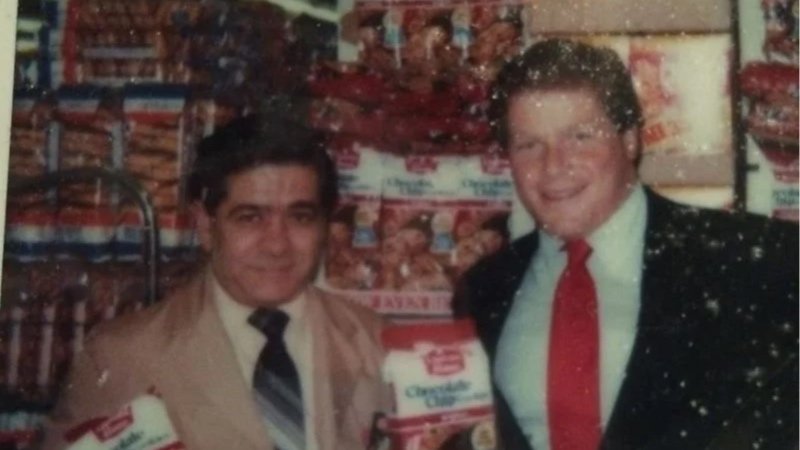
I grew up in Philadelphia. Not the glossy version of Philly you see in magazine spreads — just a kid in a city that taught you early that you had to earn it. Whatever "it" was.
I wasn't born knowing how to tell a story. But I was raised in a place where people talked to each other, where neighborhoods had characters and every block had a cast. Philadelphia has a way of doing that. It gives you texture. It gives you material. It gives you a sense of what's real and what's noise — which, it turns out, is one of the most useful things you can have in business.
I carried that with me to Colby College, where I studied liberal arts and started to realize that the skills I'd eventually rely on most — curiosity, communication, the ability to connect with people across wildly different contexts — weren't going to come from a textbook. They were going to come from paying attention.
The Education That Actually Stuck
My real education started after Colby, when I joined Procter & Gamble.
If you've never been through the P&G sales management training program, let me describe it simply: they take smart, eager people and teach them, in painstaking detail, how to actually sell. Not with tricks. Not with pressure. With preparation, with listening, and — more than anything — with a clear, compelling story about why what you're offering matters.
I'd go into grocery stores, crouch down in the aisle, and figure out how to move product. I'd bring data to buyers, sit across from skeptical purchasing managers, and learn to read a room fast. I was surrounded by colleagues who took it seriously, and I took it seriously too.
But the lesson that stuck — the one that I've been refining ever since — wasn't about closing technique or product knowledge. It was simpler and stranger than that: facts inform, but stories move people. You can show someone a spreadsheet and they'll nod. You tell them the right story and they'll act.
I didn't have a name for it then. I just knew it was true.
Building Something From Scratch
From P&G, I moved into commercial real estate — which sounds like a left turn, but wasn't. Real estate, at its core, is about understanding what people need, what they're afraid of, and what they're building toward. It's about trust. Which is to say, it's about storytelling.I eventually co-founded T3 Advisors with a conviction that the innovation economy — the tech and life sciences companies changing the world — deserved a different kind of real estate partner. Not a traditional brokerage model. Something smarter, more strategic, more honest about what companies actually need from their space.
We built T3 from the ground up. And over two decades, it became the leading workplace solutions advisor to life sciences and technology companies, representing more than 10 million square feet of real estate across the globe. In 2014, Ernst & Young named me Entrepreneur of the Year. The Boston Business Journal had put me on its 40 Under 40 list years before that.
The awards were gratifying. But what I'm proudest of is simpler: we built something that worked because we were relentlessly honest with our clients about what they needed to hear — not just what they wanted to hear.
The Pattern I Couldn't Ignore
Here's what I noticed across thousands of client conversations, board meetings, and high-stakes presentations over three decades: the leaders who got what they wanted weren't always the smartest people in the room. They weren't even always the most prepared. They were the ones who knew how to tell a story.
Not a manufactured story. Not spin. A real one — grounded in truth, shaped with intention, delivered in a way that made people lean in.
That observation quietly became an obsession. I started teaching it — first informally, to colleagues and clients, then as structured workshops for sales teams and leadership retreats. Bloomberg Radio called. Then company stages, college auditoriums, annual meetings, and television appearances.
And along the way, I served as chair of the national board of BUILD — a nonprofit that gives high school students in under-resourced communities the tools of entrepreneurship. The work was simple in concept: teach young people to become the CEOs of their own lives. What it reminded me, every time, was that storytelling isn't a business skill. It's a human one. And it belongs to everyone.
What Brought Me Here
When people ask me how I got into speaking and coaching, I usually say the same thing: I didn't pivot into this. I arrived here.
Every piece of the journey — Philadelphia, Colby, the grocery store aisles at P&G, the boardrooms, the BUILD students, the Bloomberg Radio studio, the ski slopes where I was, by my own admission, a mediocre giant slalom racer — all of it added up to one simple belief.
Every person, every company, every team has a story worth telling. Most of them just haven't figured out how to tell it yet.
That's what I do now. That's what I've always done.
And I'm just getting started.